
Filter
1793
Filtered Results: 1793
Text search:
World
Health
Organization,
Government
of
Nigeria
Featured
Recommendations
135
New Publications
464
Language
Document type
No document type
922
Studies & Reports
497
Guidelines
130
Strategic & Response Plan
80
Manuals
76
Fact sheets
36
Training Material
30
Situation Updates
12
Resource Platforms
7
Brochures
2
App
1
Countries / Regions
Nigeria
192
Global
143
Africa
95
Sierra Leone
60
Liberia
55
Kenya
46
Ethiopia
37
Uganda
32
Guinea
30
Congo, Democratic Republic of
30
West and Central Africa
27
Malawi
24
Ghana
23
Cameroon
23
South Africa
23
Tanzania
21
India
20
Senegal
18
East and Southern Africa
18
Rwanda
17
Zambia
17
Syria
15
Burkina Faso
15
Namibia
15
South Sudan
15
Mozambique
14
Zimbabwe
13
Mali
12
Ukraine
11
Benin
11
Western and Central Europe
11
Central African Republic
11
Myanmar / Burma
11
Afghanistan
10
Nepal
9
Niger
9
Middle East and North Africa
9
Yemen
9
Bangladesh
8
Indonesia
8
China
7
Asia
7
Somalia
7
Cambodia
6
Latin America and the Carribbean
6
Côte d’Ivoire / Ivory Coast
6
Chad
6
Pakistan
6
Gambia
5
Haiti
5
South–East Asia Region
5
Eswatini/ Swaziland
5
Colombia
4
Togo
4
Philippines
4
Guinea-Bissau
4
Russia
4
Sudan
4
Angola
4
Botswana
4
Mexico
3
Lesotho
3
Libya
3
Burundi
2
Mauritania
2
Jordan
2
Germany
2
Gabon
2
Japan
2
Tunisia
2
Vietnam
2
Eastern Europe
2
Moldova
2
Romania
2
Palestine
2
Poland
2
Iraq
2
Tajikistan
1
Switzerland
1
Thailand
1
Serbia
1
Iran
1
Laos
1
Estonia
1
Congo-Brazzaville
1
Malaysia
1
Morocco
1
Italy
1
Armenia
1
Venezuela
1
Eastern Europe and Central Asia
1
Mauritius
1
Morocco
1
Southern Africa
1
Sri Lanka
1
Egypt
1
Ecuador
1
Madagascar
1
Authors & Publishers
Publication Years
Category
Countries
512
Women & Child Health
132
Key Resources
113
Clinical Guidelines
104
Public Health
96
Capacity Building
25
Pharmacy & Technologies
9
Toolboxes
HIV
161
COVID-19
146
Mental Health
143
Ebola & Marburg
100
TB
89
Planetary Health
79
Disability
69
NTDs
61
Global Health Education
57
Health Financing Toolbox
56
AMR
52
Caregiver
42
Refugee
40
Conflict
39
Rapid Response
37
Malaria
32
Polio
30
Pharmacy
29
NCDs
25
2.0 Rapid Response
19
Natural Hazards
9
Cholera
8
Specific Hazards
6
Social Ethics
5
Zika
2
This report presents country, regional and global estimates of low birth weight for 2000, together with a detailed description of the methods used in calculating the estimates. Some limited data on trends are also included. The limitations of low-birth-weight data are described and recommendations a...

On August 13, 2024, the Africa CDC declared the mpox outbreak a Public Health Emergency of Continental Security (PHECS). The following day, the WHO declared it a Public Health Emergency of International Concern (PHEIC). A coordinated, continent-wide response is essential, co-led by the African Union...

The Ebola outbreak in West Africa is not over. WHO continues to work with governments and the international health community to get to zero cases and help countries stay there.
Fever Diagnostic Technology Landscape
recommended
1st edition.
Unitaid’s report describes a slate of new devices that can more efficiently identify dangerously ill children so that they can be treated immediately. These tools make it easier to recognize danger signs, and support integrated approaches to reducing childhood deaths from the three ...

Technical Guidelines for Integrated Disease Surveillance and Response in the African Region
recommended
3rd edition.
The third edition of the Integrated Disease Surveillance and Response (IDSR) Technical Guidelines was prepared by the WHO Health Emergencies (WHE) Programme with the active participation and involvement of programmes dealing with disease surveillance at the WHO Regional Office for Afri...
Fact Book on WHO Level I and Level II monitoring indicators - To monitor the progress of efforts to improve the global medicines situation, WHO has developed a system of indicators that measure important aspects of a country’s pharmaceutical situation. Level 1 indicators measure the existence and ...

WHO guideline on balanced national controlled medicines policies to ensure medical access and safety
Access to medicines is essential for attainment of universal health coverage, which is central to achievement of the health-related Sustainable Development Goals. Controlled medicines include those such as opioids, benzodiazepines, barbiturates, amphetamines and others with identified or emergent cl...

Global tuberculosis report 2025
recommended
The WHO Global tuberculosis report 2025 provides a comprehensive and up-to-date assessment of the TB epidemic and of progress in prevention, diagnosis and treatment of the disease, at global, regional and country levels. This is done in the context of global TB commitments, strategies and targets.
...

This toolkit is a comprehensive set of practical tools and resources designed to support country-level risk communication and community engagement (RCCE) practitioners, decision-makers, and partners to plan and implement readiness and response activities for yellow fever outbreaks. The toolkit conta...
Brief review of selected topics
The following pages provide a focus on selected areas in relation to neurology. The specialists who contributed the reviews are listed in the Project Team and Partners
Neurology Atlas (2004)

At the time of writing, the novel coronavirus pandemic had reached every region of the world, with millions of infections globally and untold disruptions to nearly every aspect of daily life.
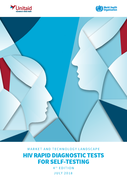
July 2018
This fourth edition of the Unitaid/WHO market and technology landscape: HIV rapid diagnostic tests for self-testing report summarizes the current HIV testing gap; the challenges facing efforts to scale up; and the potential role HIV self-testing (HIVST) could play to achieve the United...

Infectious disease outbreaks are frequently characterized by scientific uncertainty, social and institutional disruption, and an overall climate of fear and distrust. Policy makers and public health professionals may be forced to weigh and prioritize potentially competing ethical values in the face ...

COVID-19 has heavily emphasized how contact tracing is crucial for managing outbreaks, and as part of the strategy for adjusting, and eventually lifting, lockdowns and other stringent public health and social measures. As the pandemic develops further, it will be a core measure to manage further wav...

The WHO country office for Ghana, began the year 2019 with a 4-day staff retreat at the Busua Beach Resort in the Western Region from 04 to 08 March 2019. The theme for the retreat was ‘Impacting the Health and Lives of the people of Ghana through the Triple Billion Goal”. The staff outlined pri...
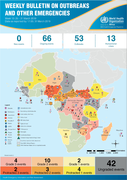
Response to the tropical cyclone in southern Africa
Ebola virus disease outbreak in the Democratic Republic of the Congo
Meningitis outbreak in Togo
Lassa fever outbreak in Liberia.

The development of this draft Proposed programme budget 2022–2023 comes at a unique moment for WHO. The world is in the grip of the coronavirus disease (COVID-19) pandemic and faces health, social and economic consequences on an unprecedented scale. Although it is not known when the COVID-19 pande...
