
Filter
4792
Filtered Results: 4792
Text search:
HIV
and
education
Featured
Recommendations
392
New Publications
1416
Language
Document type
No document type
3147
Studies & Reports
643
Guidelines
444
Manuals
186
Strategic & Response Plan
155
Training Material
75
Fact sheets
55
Infographics
30
Situation Updates
26
Resource Platforms
13
Brochures
11
Online Courses
4
Videos
2
App
1
Countries / Regions
India
245
Kenya
219
South Africa
173
Global
139
Malawi
136
Ethiopia
130
Uganda
128
Zambia
126
Tanzania
117
Nigeria
114
Nepal
100
Sierra Leone
93
Rwanda
93
Namibia
92
Liberia
88
Lesotho
72
Western and Central Europe
68
Africa
67
Myanmar / Burma
67
Bangladesh
66
Ghana
65
Zimbabwe
62
Mozambique
46
Ukraine
41
Indonesia
41
Cambodia
38
Latin America and the Carribbean
37
Asia
36
Senegal
35
Philippines
35
Eastern Europe
34
Botswana
32
Congo, Democratic Republic of
31
Haiti
28
South Sudan
27
South–East Asia Region
26
Eswatini/ Swaziland
26
Burkina Faso
25
East and Southern Africa
20
Syria
18
Guinea
18
Germany
18
Russia
18
Venezuela
17
Brazil
16
Cameroon
13
Vietnam
13
West and Central Africa
12
Eastern Europe and Central Asia
12
Albania
11
Central African Republic
11
Tajikistan
10
Benin
10
Middle East and North Africa
9
Georgia
9
Pakistan
9
Colombia
8
Sudan
8
Yemen
8
North Macedonia
7
Southern Africa
7
Papua New Guinea
7
Somalia
7
Thailand
6
Laos
6
Afghanistan
6
Jordan
6
Moldova
6
Angola
6
China
5
Burundi
5
Paraguay
5
Lebanon
5
Madagascar
5
Portugal
4
Mali
4
Timor Leste/ East Timor
3
Serbia
3
Iran
3
Peru
3
Western Pacific Region
3
United Kingdom
3
Argentina
3
Poland
3
Iraq
3
Mexico
2
El Salvador
2
Turkey
2
Gambia
2
Uzbekistan
2
Bulgaria
2
USA
2
Hungary
2
North America
2
Turkmenistan
2
Japan
2
Mauritius
2
Spain
2
Bolivia
2
Sri Lanka
2
Romania
2
Greece
2
Switzerland
1
Togo
1
Kazakhstan
1
Canada
1
Singapore
1
Estonia
1
Kyrgyzstan
1
Niger
1
Morocco
1
Qatar
1
Italy
1
Armenia
1
Guinea-Bissau
1
Croatia
1
Saudi Arabia
1
Gabon
1
France
1
Tunisia
1
Azerbaijan
1
Israel
1
Bosnia and Herzegovina
1
Côte d’Ivoire / Ivory Coast
1
Guyana
1
Egypt
1
Slovakia
1
Palestine
1
Honduras
1
Bhutan
1
Ecuador
1
Authors & Publishers
Publication Years
Category
Countries
2293
Women & Child Health
294
Clinical Guidelines
293
Public Health
191
Key Resources
189
Capacity Building
131
Pharmacy & Technologies
19
Annual Report MEDBOX
3
Toolboxes
HIV
683
TB
342
Mental Health
233
COVID-19
185
Caregiver
140
Disability
123
AMR
120
Conflict
83
Global Health Education
80
Ebola & Marburg
73
Refugee
68
NTDs
67
NCDs
51
Rapid Response
47
Pharmacy
47
Health Financing Toolbox
46
Planetary Health
43
Natural Hazards
39
Malaria
33
Cholera
24
2.0 Rapid Response
20
Polio
17
Social Ethics
14
Zika
8
Specific Hazards
3
South Sudan
1

A lack of knowledge about the threat of vaccine-preventable diseases, risks and benefits of vaccines, mistrust of government and health workers, poor service delivery and alternative health or religious beliefs play a role in lower uptake of some vaccines. These challenges underscore the importance ...
Global Action Plan on Antimicrobial Resistance
recommended
The goal of the draft global action plan is to ensure, for as long as possible, continuity of successful treatment and prevention of infectious diseases with effective and safe medicines that are quality-assured, used in a responsible way, and accessible to all who need them.

an approach to optimize the global impact of COVID-19 vaccines, based on public health goals, global and national equity, and vaccine access and coverage scenarios, first issued 20 October 2020, updated: 13 November 2020, updated: 16 July 2021, latest update: 21 January 2022
Available in English, F...
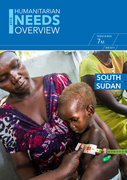
2018 South Sudan Humanitarian Needs Overview
recommended
This document provides the Humanitarian Country Team’s shared understanding of the crisis, including the most pressing
humanitarian needs and the estimated number of people who need assistance. It represents a consolidated evidence base and
helps inform joint strategic response planning.
As ...

Global Report on assistive technology
recommended
The report notes that the number of people in need of one or more assistive products is likely to rise to 3.5 billion by 2050, due to populations ageing and the prevalence of noncommunicable diseases rising across the world. The report also highlights the vast gap in access between low- and high-inc...

The new review paper, The Impacts of Climate Change on Health, identifies the extent to which increasing emissions, extreme weather and temperatures elevate health risks, from infectious disease to malnutrition, and assesses the associated health burden. It concludes that the health burden will exce...
This guidance document provides basic broad principles for a spokesperson
of any health authority on how to respond to vocal vaccine deniers.
The suggestions are based on psychological research on persuasion,
on research in public health, communication studies and on WHO risk
communication guide...

The military offensive by the Russian Federation in Ukraine which began February 2022 has triggered one of the world’s fastest-growing displacement and humanitarian crisis, with geopolitical and economic ripples felt across the globe. The ongoing war has caused large-scale disruptions to the deliv...
Polio vaccines: WHO position paper – June 2022
recommended
This position paper on polio vaccines replaces the 2016 WHO position paper, and summarizes recent developments in the field.

The global burden of disease due to mental disorders continues to rise, especially in low- and middle-income countries (LMIC). In addition to causing a large proportion of morbidity, mental disorders – especially severe mental disorders (SMD) – are linked with poorer health outcomes and increase...
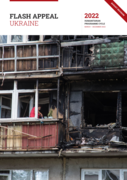
This document is the third iteration of the Flash Appeal for Ukraine, which was originally published on 1 March 2022 and revised once in mid-April. This updated Flash Appeal covers the period of 10 months following the onset of the war in Ukraine that started on 24 February 2022 (i.e., from March to...

In the kingdom of Bahrain, the national antibiotic committee will set the framework for the national response to AMR, especially bacterial resistance to antibiotics. It will be aligned with the World Health Organization’s (WHO) Global Action Plan on Antimicrobial Resistance, and with standards and...

The purpose of this guide is to offer recommendations for improving the implementation of non‑pharmacological public health measures during the COVID-19 response and compliance with these measures by population groups in situations of vulnerability. This requires determining the main barriers to i...

The Asia-Pacific Community Mental Health Development (APCMHD) project has been established in 2005 to explore diverse leading models or approaches to community mental health service delivery in the Asia-Pacific region. The objective is to illustrate and promote best practice in mental health care in...
The purpose of this manual is to define a limited number of indicators that will objectively describe the management and use of antimicrobials in hospitals and to provide tools and step-by-step instructions for designing and carrying out an assessment of antibiotic use and management in hospitals. T...

Annex 1: Measuring progress towards targets
Annex 2: Modelling the impact of the 90-(90)-90 strategy
Annex 3: Investment packages by country setting
Annex 4: Country strategies
Annex 5: Strategic frameworks for research and development for new tools
Annex 6 : Estimating the cost of the 90-(90)-...

The WHO guidelines for malaria bring together the Organization’s most up-to-date recommendations for malaria in one user-friendly and easy-to-navigate online platform.
The WHO guidelines for malaria bring together the Organization’s most up-to-date recommendations for malaria in one user-frie...

The global tripartite self-assessment survey of country progress in addressing antimicrobial resistance (AMR) is a component of a broader approach for monitoring and evaluation of the global action plan on AMR. This report analyses the results of the second tripartite self-assessment survey
