
Filter
10302
Filtered Results: 10302
Text search:
WHO
guidelines
Featured
Recommendations
1033
New Publications
2542
Language
Document type
No document type
5511
Guidelines
1758
Studies & Reports
1432
Manuals
620
Strategic & Response Plan
354
Fact sheets
244
Training Material
201
Situation Updates
77
Resource Platforms
35
Infographics
30
Brochures
19
Online Courses
13
Videos
4
App
3
Dashboards/Maps
1
Countries / Regions
India
508
Global
407
Kenya
281
South Africa
232
Nepal
199
Nigeria
197
Uganda
194
Ethiopia
185
Sierra Leone
179
Western and Central Europe
172
Liberia
163
Tanzania
150
Zambia
146
Latin America and the Carribbean
144
Malawi
138
Myanmar / Burma
138
Africa
133
Bangladesh
130
Rwanda
119
Ghana
117
Namibia
113
Ukraine
100
Syria
94
Russia
90
Indonesia
88
Philippines
83
Brazil
82
Congo, Democratic Republic of
72
Eastern Europe
69
Mozambique
62
Zimbabwe
61
South Sudan
59
Senegal
57
Lesotho
56
Cambodia
56
South–East Asia Region
56
Asia
52
Haiti
50
Middle East and North Africa
50
Guinea
48
East and Southern Africa
47
West and Central Africa
45
Germany
43
Colombia
42
Burkina Faso
41
Botswana
40
Yemen
38
Eastern Europe and Central Asia
36
Eswatini/ Swaziland
30
Cameroon
26
Paraguay
26
Pakistan
24
Venezuela
23
Angola
20
Thailand
19
USA
19
Western Pacific Region
19
Argentina
19
Mali
19
Lebanon
18
Vietnam
18
Benin
16
Afghanistan
16
Peru
16
Sudan
16
Jordan
15
Sri Lanka
15
Somalia
15
Central African Republic
14
Madagascar
14
Laos
13
Spain
13
Côte d’Ivoire / Ivory Coast
13
Tajikistan
12
China
12
Iraq
12
Chile
11
Guinea-Bissau
11
Georgia
11
Ecuador
11
El Salvador
10
Albania
9
Bolivia
9
Moldova
9
Togo
8
North America
8
United Kingdom
8
Portugal
8
Southern Africa
8
Turkey
7
Burundi
7
Palestine
7
Honduras
7
Timor Leste/ East Timor
6
Iran
6
Kyrgyzstan
6
Niger
6
Chad
6
Bhutan
6
North Macedonia
5
Mexico
5
Armenia
5
Hungary
5
Saudi Arabia
5
Japan
5
Romania
5
Greece
5
Libya
5
Guatemala
5
Kazakhstan
4
Papua New Guinea
4
Egypt
4
Gambia
3
Fiji
3
Estonia
3
Uzbekistan
3
Morocco
3
Dominican Republic
3
Jamaica
3
Nicaragua
3
Poland
3
Serbia
2
Australia
2
Canada
2
Singapore
2
Malaysia
2
Qatar
2
Italy
2
Uruguay
2
Turkmenistan
2
Belgium
2
Mauritius
2
Belarus
2
Israel
2
Bosnia and Herzegovina
2
North Korea
1
Switzerland
1
Congo-Brazzaville
1
Vanuatu
1
Bulgaria
1
Mauritania
1
Croatia
1
Lithuania
1
Gabon
1
Denmark
1
France
1
Maldives
1
Tunisia
1
Norway
1
Azerbaijan
1
Latvia
1
Belize
1
Costa Rica
1
Guyana
1
Oman
1
Panama
1
Djibouti
1
Slovakia
1
Solomon Islands
1
Authors & Publishers
Publication Years
Category
Countries
3882
Clinical Guidelines
852
Key Resources
662
Women & Child Health
585
Public Health
546
Capacity Building
242
Pharmacy & Technologies
127
Annual Report MEDBOX
3
Toolboxes
COVID-19
980
HIV
813
Mental Health
768
TB
610
Disability
369
Caregiver
330
AMR
319
NTDs
297
Ebola & Marburg
264
Planetary Health
254
Conflict
232
NCDs
229
Rapid Response
211
Pharmacy
207
Refugee
159
Malaria
141
Natural Hazards
133
2.0 Rapid Response
118
Global Health Education
109
Zika
88
Cholera
80
Specific Hazards
61
Polio
56
Health Financing Toolbox
50
Social Ethics
38
Typhoon
6
This new publication presents the continuing and emerging challenges to children’s environmental health.
A module from the suite of health service capacity assessments in the context of the COVID-19 pandemicINTERIM GUIDANCE5 February2021
The Community needs, perceptions and demand: community assessment toolcan be used by countries to conduct a rapid pulse survey of community health needs and perceptio...

The COVID-19 pandemic arrived in an evolving epidemiological context where some countries are experiencing a progressive decrease in HIV positivity in their testing programme as they are moving closer to the first 95 target. Distinguishing changes in HIV testing services due to the COVID-19 pandemic...

Regular physical activity is proven to help prevent and treat noncommunicable diseases (NCDs) such as heart disease, stroke, diabetes and breast and colon cancer. It also helps to prevent hypertension, overweight and obesity and can improve mental health, quality of life
and well-being.
The role of environmental contamination in transmission of COVID-19 virus is currently not clear. This protocol has been designed to determine (viable) virus presence and persistence on fomites in various locations where a patient infected with COVID-19 is currently receiving care or being isolated,...
A training package for building capacity of healthcare teams in health facilities for continous quality improvement of maternal and newborn healthcare. The focus is on the care of mothers and newborns at the time of child birth since a large proportion of maternal deaths, newborn deaths and stillbir...
School health programmes have been demonstrated to be the most cost-effective way to influence health behaviours in young people. The purpose of this two-part handbook is to support schools as they seek to implement interventions aimed at reducing the main modifiable risk behaviours f...

The Disability inclusion guide for action supports ministries of health and their partners in both advancing health equity for persons with disabilities by identifying entry points, and planning appropriate actions that strengthen the health system through disability inclusion. It focuses on address...
Cholera is a major health risk in many parts of the world, affecting millions of people every year. Since mid-2021, the world has been facing an acute upsurge of the 7th cholera pandemic, which is characterized by the number, size and concurrence of multiple outbreaks, the spread to areas that had b...

Interium guidance, 25 June 2021Timely and accurate diagnostic testing is an essential tool in preventing and controlling the spread of COVID-19. This document describes recommendations for national testing strategies and the use of PCR and rapid antigen tests in different transmission scenarios of t...

Mission report: June 11-20, 2017

22 December 2020
The COVID-19 vaccine safety guidance manual has been developed upon recommendation and guidance of GACVS members, as well as by experts incorporating current and available information critical to all stakeholders when COVID-19 vaccines will be introduced.
For ease of use, the man...
The objectives of pertussis surveillance are to:hmonitor disease burden and the impact of the pertussis vaccination programme, with a special focus on understanding the morbidity and mortality in children < 5 years of agehgenerate data to inform vaccine schedule and delivery strategy decisions to op...
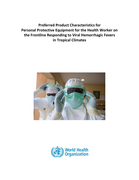
The scope of this PPC document is to serve as a guide to address the unmet public health need for a PPE system that protects the HW-F in tropical climate
s while caring for patients and providing heavy duty essential health services.
The characteristics described in this guidance are targeted fo...
Countries reported disruptions in all health-care settings. In more than half of countries surveyed, many people are still unable to access care at the primary care and community care levels. Significant disruptions have also been reported in emergency care, particularly concerning given the impact...

План предназначен как методическое руководство для наиболее приоритетных стран Региона при разработке собственных долго- и краткосрочных национальных планов в о...
Annual and medium-term budget preparation processes are the platforms through which specific plans are transformed into actual resource allocation decisions. The aim of this Process Guide is to support key stakeholders involved in these processes (such as the Cabinet, Ministries of Finance and Healt...
