
Filter
3655
Filtered Results: 3655
Text search:
staff
performance
assessment
Featured
Recommendations
366
New Publications
1139
Language
Document type
No document type
2190
Guidelines
478
Studies & Reports
452
Manuals
273
Strategic & Response Plan
151
Training Material
54
Fact sheets
27
Situation Updates
20
Resource Platforms
5
Brochures
2
Infographics
2
Online Courses
1
Countries / Regions
India
173
Kenya
136
Global
131
Uganda
105
Ethiopia
105
South Africa
89
Sierra Leone
86
Liberia
83
Nepal
76
Tanzania
76
Nigeria
74
Rwanda
70
Zambia
67
Malawi
64
Western and Central Europe
61
Ghana
59
Myanmar / Burma
59
Namibia
57
Bangladesh
53
Africa
39
Congo, Democratic Republic of
35
Philippines
29
Syria
27
Cambodia
27
Lesotho
26
Guinea
26
Ukraine
25
Eastern Europe
24
Zimbabwe
21
South Sudan
21
Senegal
20
Botswana
20
Latin America and the Carribbean
19
West and Central Africa
19
East and Southern Africa
17
Indonesia
17
Haiti
16
South–East Asia Region
16
Mozambique
15
Asia
15
Cameroon
14
Afghanistan
13
Eswatini/ Swaziland
13
Pakistan
13
Burkina Faso
10
Jordan
10
Benin
9
Eastern Europe and Central Asia
9
Middle East and North Africa
8
Albania
7
Germany
7
Lebanon
7
Sudan
7
Central African Republic
7
Thailand
6
Yemen
6
Somalia
6
Colombia
5
Vietnam
5
Brazil
5
Tajikistan
4
Turkey
4
Gambia
4
China
4
Chile
4
Burundi
4
Peru
4
USA
4
Venezuela
4
Western Pacific Region
4
Southern Africa
4
Côte d’Ivoire / Ivory Coast
4
Russia
4
Georgia
4
Angola
4
Ecuador
4
Madagascar
4
Togo
3
Paraguay
3
Sri Lanka
3
Mali
3
Chad
3
Bhutan
3
Iraq
3
North Macedonia
2
Laos
2
United Kingdom
2
Moldova
2
Timor Leste/ East Timor
1
Mexico
1
El Salvador
1
Australia
1
Kazakhstan
1
Iran
1
Singapore
1
Kyrgyzstan
1
Niger
1
Vanuatu
1
Morocco
1
Qatar
1
Bulgaria
1
Armenia
1
Dominican Republic
1
Guinea-Bissau
1
Croatia
1
Lithuania
1
Saudi Arabia
1
North America
1
Japan
1
France
1
Mauritius
1
Tunisia
1
Portugal
1
Spain
1
Bolivia
1
Argentina
1
Papua New Guinea
1
Djibouti
1
Egypt
1
Greece
1
Palestine
1
Poland
1
Honduras
1
Libya
1
Authors & Publishers
Publication Years
Category
Countries
1553
Key Resources
316
Clinical Guidelines
249
Public Health
209
Women & Child Health
183
Capacity Building
87
Pharmacy & Technologies
58
Toolboxes
HIV
222
TB
211
COVID-19
204
Mental Health
194
Caregiver
148
Disability
122
Ebola & Marburg
94
Planetary Health
91
AMR
86
Rapid Response
82
Conflict
82
NTDs
74
Pharmacy
69
Natural Hazards
57
Malaria
52
2.0 Rapid Response
52
NCDs
46
Global Health Education
43
Refugee
37
Health Financing Toolbox
35
Polio
32
Specific Hazards
24
Zika
14
Cholera
12
Social Ethics
8
Typhoon
3

A lot has happened this year. While we continued to tackle the COVID-19 pandemic, we were hit by disease outbreaks and
humanitarian crises. Yet, despite these challenges, we marched on, resolute in resolving critical health systems issues to increase
access to quality healthcare services. To furth...

In this document, the Inter-American Committee of Cardiovascular Prevention and Rehabilitation, together with the South
American Society of Cardiology, aimed to formulate strategies, measures, and actions for cardiovascular disease prevention
and rehabilitation (CVDPR). In the context of the imple...

The development of the Country Cooperation Strategy (CCS) was based on a consultative and participatory process with strong commitment and support from the Ministry of Health of Ghana. The CCS draws on lessons from the implementation of the first, and second generation CCSs, the country focus strate...
India contributes to 16% of the global maternal deaths and around 27% of global newborn deaths. Reducing the burden of maternal and newborn mortality and morbidity in urban poor settings today requires an expansion of effective Maternal and Newborn Health (MNH) care services and lowering the barrier...
The core of the strategy is the goal for all patients to have better overall care, so that the numbers of deaths and cases of disability are reduced by 50% before 2030. For this to be achieved, four strategic aims will be pursued.
Empower and engage communities,
Ensure safe, effective trea...

DHS Comparative Reports No. 41

HIV drug resistance strategies focus on prevention through adherence and treatment optimization, surveillance to monitor resistance trends, and innovation in new drugs and diagnostics. Key approaches include implementing national action plans, strengthening laboratory capacity for monitoring, and pr...
his practical Guide serves as a companion to the “WHO guideline: recommendations on digital interventions for health system strengthening” and provides a systematic process for countries to develop a costed implementation plan for digital health within one or more health programme areas, drawing...
Health care-associated infections (HAI) are one of the most common adverse events in care delivery and a major public health problem with an impact on morbidity, mortality and quality of life. At any one time, up to 7% of patients in developed and 10% in developing countries will acquire at least on...

This report compiles data for the first time on the far-reaching consequences of uncontrolled hypertension, including heart attacks, strokes and premature death, along with substantial economic losses for communities and countries. It also contains information on the global, regional and country-lev...


WHO‘s Global Strategy to Accelerate the Elimination of Cervical Cancer, launched today, outlines three key steps: vaccination, screening and treatment. Successful implementation of all three could reduce more than 40% of new cases of the disease and 5 million related deaths by 2050.


To enhance health co-benefits across urban policies which tackle air pollution and climate change, WHO, in cooperation with various international, national, and local partners, implemented the Urban Health Initiative (UHI) pilot project in Accra, Ghana. The Initiative prompted the health sector to u...
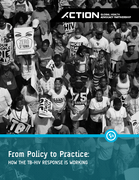
From policy to practice: how the TB-HIV response is working
“The HIV community must place much more focus on TB co-infection than
it has done to date. TB takes the lives of over 1000 people living with HIV
every day, a number which is absolutely unacceptable. This report highlights that
TB d...

