Filter
2687
Filtered Results: 2687
Text search:
Emergency
Capacity
Building
Project
Featured
Recommendations
186
New Publications
851
Language
Document type
No document type
1589
Studies & Reports
495
Guidelines
201
Manuals
164
Strategic & Response Plan
139
Training Material
49
Situation Updates
24
Fact sheets
12
Resource Platforms
6
Infographics
3
Brochures
2
Online Courses
2
App
1
Countries / Regions
Global
127
Kenya
92
India
84
Myanmar / Burma
83
Uganda
74
Nepal
73
Liberia
65
Sierra Leone
60
Syria
60
Ethiopia
60
Nigeria
59
Bangladesh
56
Zambia
46
Africa
43
South Africa
43
Western and Central Europe
42
Rwanda
38
Malawi
37
Tanzania
37
Ghana
36
South Sudan
36
Namibia
34
Ukraine
29
Guinea
23
Mozambique
23
Congo, Democratic Republic of
23
Haiti
22
Latin America and the Carribbean
22
Asia
20
Indonesia
19
Lesotho
18
Philippines
18
Zimbabwe
16
Eastern Europe
16
Cambodia
14
East and Southern Africa
14
Yemen
14
West and Central Africa
13
Lebanon
13
Jordan
12
South–East Asia Region
12
Botswana
12
Pakistan
12
Senegal
11
Laos
10
Burkina Faso
8
Venezuela
8
Eastern Europe and Central Asia
8
Sudan
8
Central African Republic
8
Eswatini/ Swaziland
8
Colombia
7
Cameroon
7
Middle East and North Africa
7
Moldova
7
Iraq
7
Thailand
6
China
5
Afghanistan
5
Western Pacific Region
5
Vietnam
5
Mali
5
Somalia
5
Turkey
4
Benin
4
Iran
4
Albania
4
Burundi
4
Germany
4
Côte d’Ivoire / Ivory Coast
4
Brazil
4
Sri Lanka
4
Russia
4
Libya
4
North Macedonia
3
Timor Leste/ East Timor
3
Chile
3
Italy
3
USA
3
Croatia
3
Greece
3
Chad
3
Ecuador
3
Madagascar
3
Tajikistan
2
El Salvador
2
Gambia
2
Togo
2
Estonia
2
Peru
2
Dominican Republic
2
Paraguay
2
Turkmenistan
2
Jamaica
2
Japan
2
Southern Africa
2
Argentina
2
Palestine
2
Georgia
2
Angola
2
Serbia
1
Kazakhstan
1
Singapore
1
Kyrgyzstan
1
Niger
1
Uzbekistan
1
Malaysia
1
Morocco
1
Qatar
1
Bulgaria
1
Guinea-Bissau
1
Lithuania
1
Saudi Arabia
1
Gabon
1
Tunisia
1
United Kingdom
1
Portugal
1
Spain
1
Azerbaijan
1
Bosnia and Herzegovina
1
Bolivia
1
Belize
1
Costa Rica
1
Panama
1
Papua New Guinea
1
Nicaragua
1
Egypt
1
Poland
1
Honduras
1
Bhutan
1
Guatemala
1
Authors & Publishers
Publication Years
Category
Countries
1065
Key Resources
328
Public Health
132
Women & Child Health
128
Clinical Guidelines
83
Capacity Building
53
Pharmacy & Technologies
13
Toolboxes
Mental Health
175
HIV
168
COVID-19
162
Conflict
151
Planetary Health
136
Disability
106
TB
96
Natural Hazards
81
AMR
81
Ebola & Marburg
70
Rapid Response
56
Refugee
56
Caregiver
56
Global Health Education
54
Health Financing Toolbox
48
NTDs
39
2.0 Rapid Response
37
Pharmacy
26
Malaria
26
NCDs
24
Specific Hazards
17
Polio
14
Cholera
9
Zika
9
Social Ethics
7
Typhoon
2
South Sudan
1
The EYE communication strategy is intended for use by all EYE partners and respective communication teams, as well as regional and country colleagues who will need to communicate about the work of EYE. It will also be publicly available for others, such as non-governmental organizations (NGOs) and p...
The purpose of the landscape analysis is ultimately to facilitate improved engagement of private providers, thereby contributing to universal access to quality and affordable TB care and the end of the TB epidemic. It focuses on the role of private for-profit providers and on specific challenges and...


Why a 4°C warmer world must be avoided
A workshop of “first mover” countries to exchange experience and identify wider policy implications for the WHO European Region
The World Health Organization (WHO) European Region continues to be severely affected by diet-related noncommunicable diseases (NCDs), obesity and, in some countries, ...
Full eHandbook under: http://www.msh.org/resources/health-systems-in-action-an-ehandbook-for-leaders-and-managers
Effective supply management has the potential to make a powerful contribution to the reliable availability of essential medicines, which are a crucial part of the delivery of highqualit...

WHO Technical Series 971

Statement
Impact of migration on infectious diseases in Europe | August 2007 | 1-7

13 July 2021
The module provides an overview of factors to consider when monitoring the safety of COVID-19 vaccines administered to pregnant and breastfeeding women. It describes how national routine AEFI surveillance should be adapted to cater for this specific group of population using both pass...

The Global Asthma Report (GAR) 2022, prepared by the Global Asthma Network (GAN), is the fourth such report (others 2011, 2014, 2018). GAN builds upon the work of the International Study of Asthma and Allergies in Childhood (ISAAC) and The International Union Against Tuberculosis and Lung Disease (T...

Inequality of access to palliative care and symptom relief is one of the greatest disparities in global health care (1). Currently, there is avoidable suffering on a massive scale due to lack of access to palliative care and symptom relief in low- and middle-income countries (LMICs) (1). Yet basic p...

Antimicrobial resistance (AMR) is a global public health crisis that resulted in 1.14 million deaths in 2021. According to the Institute for Health Metrics and Evaluation estimates, 96 416 of these deaths occurred in the World Health Organization (WHO) Eastern Mediterranean Region. All 22 countr...


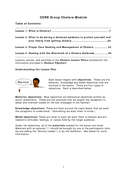
CORE Group has developed a module on cholera to address gaps in preparedness and response in at-risk countries and communities. The guide contains four different lesson plans and is complemented by flipcharts designed for use by community health workers. The lessons are aimed at mothers and carers o...