
Filter
6812
Filtered Results: 6812
Text search:
resource
and
training
centre
Featured
Recommendations
648
New Publications
1887
Language
Document type
No document type
3965
Studies & Reports
1011
Guidelines
812
Manuals
429
Strategic & Response Plan
289
Training Material
149
Fact sheets
60
Situation Updates
51
Resource Platforms
22
Brochures
11
Online Courses
6
Infographics
5
App
2
Countries / Regions
India
296
Global
264
Kenya
195
Sierra Leone
158
Uganda
150
Ethiopia
150
Nepal
141
Liberia
136
South Africa
132
Nigeria
127
Western and Central Europe
127
Myanmar / Burma
125
Malawi
116
Rwanda
105
Bangladesh
102
Zambia
101
Tanzania
92
Syria
90
Ghana
88
Africa
87
Namibia
76
Latin America and the Carribbean
71
Ukraine
70
Congo, Democratic Republic of
63
Philippines
60
South Sudan
54
Eastern Europe
48
Lesotho
45
Cambodia
45
Haiti
44
Zimbabwe
43
Indonesia
43
Guinea
42
Senegal
40
Mozambique
39
South–East Asia Region
38
Asia
37
East and Southern Africa
32
Cameroon
29
West and Central Africa
28
Botswana
26
Burkina Faso
25
Pakistan
23
Afghanistan
21
Yemen
21
Middle East and North Africa
20
Russia
20
Germany
19
Vietnam
19
Eastern Europe and Central Asia
18
Brazil
17
Jordan
16
Central African Republic
16
Mali
16
Thailand
15
Lebanon
15
Western Pacific Region
14
Somalia
14
Eswatini/ Swaziland
14
Laos
13
USA
13
Sudan
13
Madagascar
13
China
12
Turkey
11
Moldova
11
Sri Lanka
11
Tajikistan
10
Benin
10
Albania
10
Peru
10
Iraq
10
Colombia
9
Iran
9
Georgia
9
Venezuela
8
Côte d’Ivoire / Ivory Coast
8
North Macedonia
7
Togo
7
Burundi
7
Southern Africa
7
Papua New Guinea
7
Palestine
7
Timor Leste/ East Timor
6
Chad
6
El Salvador
5
Gambia
5
Paraguay
5
Poland
5
Libya
5
Bhutan
5
Mexico
4
Canada
4
Niger
4
North America
4
Japan
4
Bolivia
4
Argentina
4
Romania
4
Honduras
4
Angola
4
Singapore
3
Kyrgyzstan
3
Malaysia
3
Croatia
3
Hungary
3
Turkmenistan
3
Mauritius
3
United Kingdom
3
Belarus
3
Greece
3
Guatemala
3
Serbia
2
Kazakhstan
2
Chile
2
Fiji
2
Estonia
2
Uzbekistan
2
Bulgaria
2
Mauritania
2
Armenia
2
Dominican Republic
2
Guinea-Bissau
2
Lithuania
2
Saudi Arabia
2
Jamaica
2
Portugal
2
Spain
2
Azerbaijan
2
Nicaragua
2
Egypt
2
Slovakia
2
Ecuador
2
North Korea
1
Switzerland
1
Vanuatu
1
Morocco
1
Qatar
1
Ireland
1
Belgium
1
France
1
Maldives
1
Tunisia
1
Bosnia and Herzegovina
1
Belize
1
Costa Rica
1
Guyana
1
Panama
1
Djibouti
1
Solomon Islands
1
Authors & Publishers
Publication Years
Category
Countries
2538
Key Resources
473
Clinical Guidelines
465
Women & Child Health
405
Public Health
388
Capacity Building
179
Pharmacy & Technologies
57
Toolboxes
Mental Health
586
HIV
492
COVID-19
417
Disability
382
TB
316
Caregiver
236
Ebola & Marburg
215
Conflict
215
Planetary Health
214
AMR
173
NTDs
172
Rapid Response
144
Refugee
130
Natural Hazards
113
Global Health Education
110
Pharmacy
109
2.0 Rapid Response
97
NCDs
87
Malaria
70
Cholera
52
Health Financing Toolbox
48
Specific Hazards
43
Social Ethics
36
Polio
35
Zika
33
Typhoon
3
South Sudan
2
Based on WHO South-East Asia Regional Strategy on Autism Spectrum Disorder
The collaborative framework for implementation of the “WHO South-East Asia Regional Strategy on Autism Spectrum Disorders” articulates to Member States: the nature of autism spectrum disorder and the issues faced by ...
The collaborative framework for implementation of the “WHO South-East Asia Regional Strategy on Autism Spectrum Disorders” articulates to Member States: the nature of autism spectrum disorder and the issues faced by ...
The world is facing an unprecedented range of emergencies. In reaction to these complex adversities, many people experience considerable distress and impairment, and a minority may even go on to develop mental health conditions. Meanwhile, those with pre-existing mental health conditions may experie...

Confronted with the important issue of patient safety, in 2002 the Fifty-fifth World Health Assembly adopted a resolution urging countries to pay the closest possible attention to the problem and to strengthen safety and monitoring systems. In May 2004, the Fifty-seventh World Health Assembly approv...
Social Determinants of Health Discussion Paper 1 (Debates). This paper was prepared for the launch of the Commission on Social Determinants of Health (CSDH) by its secretariat based at WHO in Geneva. It was discussed by the Commissioners and then revised considering their input.
On 9 February 2021, a first webinar entitled “Expanding our understanding of Post COVID-19 condition” was held under the auspices of WHO and in consultation with the International Severe Acute Respiratory and Emerging Infection Consortium(ISARIC), Global Research Collaboration for Infectious Dis...
The objective of this guidance document is to support the public health professionals
in implementing effective surveillance of cholera in at-risk, endemic and epidemic
areas. This document has been developed by the Surveillance Working Group of the
Global Task Force for Cholera Control (GTFCC) a...
War Child put forward a specific request for comparative study, addressing the following questions: •What are the key types of intervention for psychosocial assistance that are being applied to children in war-affected areas? •What are the results of (scientific) research into the effects of th...

This guidance document is designed to ensure that the process of iteratively managing the health risks of climate change is integrated into the overall National Adaptation Planning (NAP) process, including through assessing risks; identifying, prioritizing, and implementing adaptation options; and m...
Mental health is critically important to everyone, everywhere. All over the world, mental health needs are high but responses are insufficient and inadequate. The World mental health report: transforming mental health for all is designed to inspire and inform better mental health for everyone everyw...

This fourth annual report monitors global progress towards the 2023 target for global elimination of industrially produced trans-fatty acids (TFA), highlighting achievements during the past year (October 2021 – September 2022). Countries are responding to the World Health Organization (WHO) call t...
In the last five years, i.e. how old turned the Campaign “Indifesa” (Defenceless) in 2016, that was launched by Terre des Hommes in 2012, the world has become smaller. One can actually say that the derangements following the Arab Spring in 2011 reshuffled what is stable and what produces instabi...
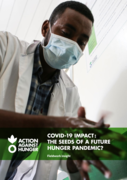
Previous pandemics have demonstrated that more people could die from the indirect consequences of an outbreak than from the disease itself. As the fight against the pandemic is pushing millions into poverty and hunger, COVID-19 will likely be no different.
Since the 1970s, voluntary contributions have become an increasingly important component of WHO's budget. As voluntary contributions tend to be earmarked for donor-specified programmes and projects, there are concerns that this trend has diverted focus away from WHO's strategic priorities, made coor...

This fourth annual report monitors global progress towards the 2023 target for global elimination of industrially produced trans-fatty acids (TFA), highlighting achievements during the past year (October 2021 – September 2022). Countries are responding to the World Health Organization (WHO) call t...

Non-communicable diseases (NCDs) are the second common cause of death in sub-Saharan Africa (SSA) accounting for about 35% of all deaths, after a composite of communicable, maternal, neonatal, and nutritional diseases. Despite prior perception of low NCDs mortality rates, current evidence suggests t...
Six months in, the indirect impacts of COVID-19 take a toll on health, social and economic outcomes.
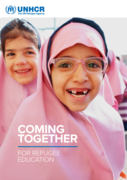
Children in every country are struggling with the impact of COVID-19. An entire generation has had its education disrupted, from nurseries and pre-primaries to universities and apprenticeships
The global cholera statistics for 2024, showing an increase in both the number of people who fell sick and died from the disease.
Reported cholera cases rose by 5% and deaths by 50% in 2024 compared to 2023, with more than 6000 people dying from a disease that is both preventable and treatable. Whi...
PLoSONE 14(9):e0223104.https://doi.org/10.1371/journal.pone.0223104.
The survey centering on reasons behind community resistance was conducted in Butembo in November during a time of Ebola transmission. A researcher from Catholic University of Graben in Butembo and collaborators at the University o...
