
Filter
6812
Filtered Results: 6812
Text search:
resource
and
training
centre
Featured
Recommendations
648
New Publications
1887
Language
Document type
No document type
3965
Studies & Reports
1011
Guidelines
812
Manuals
429
Strategic & Response Plan
289
Training Material
149
Fact sheets
60
Situation Updates
51
Resource Platforms
22
Brochures
11
Online Courses
6
Infographics
5
App
2
Countries / Regions
India
296
Global
264
Kenya
195
Sierra Leone
158
Uganda
150
Ethiopia
150
Nepal
141
Liberia
136
South Africa
132
Nigeria
127
Western and Central Europe
127
Myanmar / Burma
125
Malawi
116
Rwanda
105
Bangladesh
102
Zambia
101
Tanzania
92
Syria
90
Ghana
88
Africa
87
Namibia
76
Latin America and the Carribbean
71
Ukraine
70
Congo, Democratic Republic of
63
Philippines
60
South Sudan
54
Eastern Europe
48
Lesotho
45
Cambodia
45
Haiti
44
Zimbabwe
43
Indonesia
43
Guinea
42
Senegal
40
Mozambique
39
South–East Asia Region
38
Asia
37
East and Southern Africa
32
Cameroon
29
West and Central Africa
28
Botswana
26
Burkina Faso
25
Pakistan
23
Afghanistan
21
Yemen
21
Middle East and North Africa
20
Russia
20
Germany
19
Vietnam
19
Eastern Europe and Central Asia
18
Brazil
17
Jordan
16
Central African Republic
16
Mali
16
Thailand
15
Lebanon
15
Western Pacific Region
14
Somalia
14
Eswatini/ Swaziland
14
Laos
13
USA
13
Sudan
13
Madagascar
13
China
12
Turkey
11
Moldova
11
Sri Lanka
11
Tajikistan
10
Benin
10
Albania
10
Peru
10
Iraq
10
Colombia
9
Iran
9
Georgia
9
Venezuela
8
Côte d’Ivoire / Ivory Coast
8
North Macedonia
7
Togo
7
Burundi
7
Southern Africa
7
Papua New Guinea
7
Palestine
7
Timor Leste/ East Timor
6
Chad
6
El Salvador
5
Gambia
5
Paraguay
5
Poland
5
Libya
5
Bhutan
5
Mexico
4
Canada
4
Niger
4
North America
4
Japan
4
Bolivia
4
Argentina
4
Romania
4
Honduras
4
Angola
4
Singapore
3
Kyrgyzstan
3
Malaysia
3
Croatia
3
Hungary
3
Turkmenistan
3
Mauritius
3
United Kingdom
3
Belarus
3
Greece
3
Guatemala
3
Serbia
2
Kazakhstan
2
Chile
2
Fiji
2
Estonia
2
Uzbekistan
2
Bulgaria
2
Mauritania
2
Armenia
2
Dominican Republic
2
Guinea-Bissau
2
Lithuania
2
Saudi Arabia
2
Jamaica
2
Portugal
2
Spain
2
Azerbaijan
2
Nicaragua
2
Egypt
2
Slovakia
2
Ecuador
2
North Korea
1
Switzerland
1
Vanuatu
1
Morocco
1
Qatar
1
Ireland
1
Belgium
1
France
1
Maldives
1
Tunisia
1
Bosnia and Herzegovina
1
Belize
1
Costa Rica
1
Guyana
1
Panama
1
Djibouti
1
Solomon Islands
1
Authors & Publishers
Publication Years
Category
Countries
2538
Key Resources
473
Clinical Guidelines
465
Women & Child Health
405
Public Health
388
Capacity Building
179
Pharmacy & Technologies
57
Toolboxes
Mental Health
586
HIV
492
COVID-19
417
Disability
382
TB
316
Caregiver
236
Ebola & Marburg
215
Conflict
215
Planetary Health
214
AMR
173
NTDs
172
Rapid Response
144
Refugee
130
Natural Hazards
113
Global Health Education
110
Pharmacy
109
2.0 Rapid Response
97
NCDs
87
Malaria
70
Cholera
52
Health Financing Toolbox
48
Specific Hazards
43
Social Ethics
36
Polio
35
Zika
33
Typhoon
3
South Sudan
2

The Democratic Republic of Timor-Leste has the highest TB incidence rate in the South East Asian Region - 498 per 100,000, which is the seventh highest in the world. In Timor-Leste TB is the eighth most common cause of death.
The salient observations are as follows:
In 2018, 487 (12.5%) of the...

In In recent years, China has increased its international engagement in health. Nonetheless, the lack
of data on contributions has limited efforts to examine contributions from China. Existing estimates that track
development assistance for health (DAH) from China have relied primarily on one data...
6 July 2021. The “WHO consolidated guidelines on tuberculosis. Module 3: Diagnosis - Rapid diagnostics for tuberculosis detection 2021 update” is the latest document replacing the one issued in 2020. Three new nucleic acid amplification test (NAAT) classes are endorsed by WHO and included in the...

This publication’s primary purpose is to provide a compilation of actions to address malnutrition in all its forms, in a concise and user-friendly format to help in decision-making processes for integration of nutrition interventions in national health policies, strategies, and plans based on coun...
The United Nations (UN) adopted a new international legal instrument in November 2000, the UN Protocol to Prevent, Suppress and Punish Trafficking in Persons, especially Women and Children, supplementing the UN Convention against Transnational Organized Crime. This contained a new definition of traf...
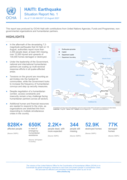
A 7.2-magnitude earthquake struck southwestern Haiti at 8:30am local time at a depth of around 10km. The epicentre was recorded around 12km northeast of SaintLouis-du-Sud, about 125km west of the capital Port-au-Prince.
● In the aftermath of the devastating 7.2-magnitude earthquake that hit Hai...
The UNAIDS 2020 global report is a call to action. It highlights the scale of the HIV epidemic and how it runs along the fault lines of inequalities.
The WHO/UNICEF JMP report, WASH in Health Care Facilities, is the first comprehensive global assessment of water, sanitation and hygiene (WASH) in health care facilities. It also finds that 1 in 5 health care facilities has no sanitation service*, impacting 1.5 billion people. The report further rev...

The Monitoring Report, which covers the first two months of the response from 25 August to 31 October, highlights the work of the Government of Bangladesh, in cooperation with humanitarian partners who are working to provide relief services for the refugee population and Bangladeshi host communities...
The WHO Framework Convention on Tobacco Control (WHO FCTC) is an evidence-based treaty that reaffirms the right of all people to the highest standard of health and was developed in response to the globalization of the tobacco epidemic. Member States of the WHO South-East Asia Region have made...

While the full extent of Cyclone Ida’s impact is still being assessed, early reports indicate significant damage to infrastructure and livelihoods, with an estimated 3,000km2 of land submerged. Preliminary government reports as of 24 March indicate that more than 58,600 houses have been damaged, i...
Integrated community case management (ICCM) – an approach where community-based health workers are trained to identify, treat and refer children under-five with pneumonia, diarrhoea and malaria – is increasingly being used across sub-Saharan Africa to supplement the gaps in basic healthcare prov...
Haiti, one of the poorest countries in the world, was devastated by an earthquake in 2010. The disaster uncovered the realities of a non-existent mental health care system with only ten psychiatrists nationwide. Attempts were made to assess the increased prevalence of mental illness, likely due to t...
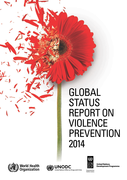
The Global status report on violence prevention 2014, which reflects data from 133 countries, is the first report of its kind to assess national efforts to address interpersonal violence, namely child maltreatment, youth violence, intimate partner and sexual violence, and elder abuse. Jointly publis...
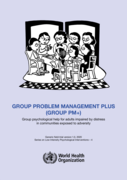
Group psychological help for adults impaired by distress in communities exposed to adversity
With this manual, the World Health Organization (WHO) is responding to requests from colleagues around the world for a group version of the manual Problem Management Plus (PM+), which was developed for adul...
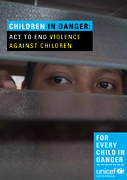
Every five minutes a child dies as the result of violence, according to a ground-breaking report from Unicef UK. The report reveals that the vast majority of children are killed outside warzones and that physical, sexual and emotional abuse is widespread with millions of children unsafe in their hom...

Thirty years ago, the United Nations General Assembly adopted the Convention on the Rights of the Child at a moment of rapid global change marked by the end of apartheid, the fall of the Berlin Wall and the birth of the World Wide Web. These developments and more brought momentous and lasting evolut...
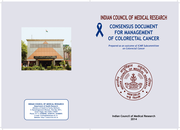
Prepared as an outcome of ICMR Subcommittee on Colorectal Cancer | Coordinated by Division of Non Communicable Diseases | This Consensus Document on Management of Colorectal Cancer summarizes the modalities of treatment including the site-specific anti-cancer therapies,
supportive and palliative ca...
Accessed on 31.03.2020
This Guidance Note aims to provide humanitarian child protection practitioners, particularly child protection advisors and program managers, with guidance on how to engage in responses to infectious disease outbreaks to ensure children’s protection needs are taken into ac...
In 2024, we need US$1.5 billion to provide live-saving health care to millions of people in emergencies. An alarming combination of conflict, climate-related threats and increasing economic hardship mean an estimated 166 million people require health assistance.
