
Filter
2652
Filtered Results: 2652
Text search:
House,
S.
Featured
Recommendations
195
New Publications
693
Language
Document type
No document type
1454
Studies & Reports
526
Guidelines
302
Manuals
152
Strategic & Response Plan
90
Training Material
41
Fact sheets
32
Situation Updates
29
Brochures
13
Infographics
6
Resource Platforms
4
Videos
2
Dashboards/Maps
1
Countries / Regions
India
179
Global
119
Brazil
75
Kenya
72
Bangladesh
58
Germany
57
Myanmar / Burma
55
Uganda
52
Nepal
51
Sierra Leone
50
Ethiopia
48
Nigeria
47
Western and Central Europe
47
Latin America and the Carribbean
45
South Africa
45
Liberia
45
Mozambique
44
Syria
37
Tanzania
37
Rwanda
36
Ukraine
34
Malawi
33
Ghana
29
Africa
29
Philippines
28
Namibia
28
Zambia
27
Congo, Democratic Republic of
24
South Sudan
23
Haiti
21
Eastern Europe
20
Yemen
20
Zimbabwe
18
Indonesia
18
Guinea
17
Asia
17
Senegal
16
Afghanistan
14
Cambodia
14
South–East Asia Region
14
Russia
12
Angola
12
Lesotho
11
East and Southern Africa
11
Vietnam
11
Pakistan
11
Thailand
10
West and Central Africa
10
USA
9
Venezuela
9
Lebanon
9
Burkina Faso
8
Middle East and North Africa
8
Central African Republic
8
Colombia
7
Jordan
7
Sri Lanka
7
Cameroon
6
Laos
6
Peru
6
North America
6
Botswana
6
Eswatini/ Swaziland
6
Guatemala
6
China
5
Guinea-Bissau
5
Eastern Europe and Central Asia
5
Portugal
5
Somalia
5
Tajikistan
4
Iran
4
Paraguay
4
Spain
4
Southern Africa
4
Côte d’Ivoire / Ivory Coast
4
Sudan
4
Mali
4
Chad
4
Madagascar
4
Switzerland
3
Timor Leste/ East Timor
3
El Salvador
3
Turkey
3
Albania
3
Western Pacific Region
3
United Kingdom
3
Moldova
3
Georgia
3
Honduras
3
Iraq
3
North Macedonia
2
Benin
2
Chile
2
Canada
2
Burundi
2
Italy
2
Dominican Republic
2
Japan
2
Israel
2
Papua New Guinea
2
Nicaragua
2
Romania
2
Poland
2
Bhutan
2
Mexico
1
Serbia
1
Togo
1
Kyrgyzstan
1
Niger
1
Malaysia
1
Armenia
1
Croatia
1
Hungary
1
Lithuania
1
Ireland
1
Gabon
1
Uruguay
1
Turkmenistan
1
Belgium
1
France
1
Mauritius
1
Azerbaijan
1
Belarus
1
Bosnia and Herzegovina
1
Bolivia
1
Belize
1
Costa Rica
1
Panama
1
Argentina
1
Djibouti
1
Slovakia
1
Greece
1
Palestine
1
Libya
1
Ecuador
1
Cuba
1
Authors & Publishers
Publication Years
Category
Countries
1072
Key Resources
161
Clinical Guidelines
143
Public Health
133
Women & Child Health
102
Capacity Building
44
Pharmacy & Technologies
23
Annual Report MEDBOX
1
Toolboxes
Mental Health
249
COVID-19
218
Disability
134
NTDs
125
Planetary Health
115
HIV
109
TB
107
Refugee
103
Conflict
83
Natural Hazards
75
Ebola & Marburg
74
AMR
58
Caregiver
55
Global Health Education
47
Malaria
44
Rapid Response
36
Pharmacy
35
Health Financing Toolbox
33
NCDs
33
Cholera
19
Polio
19
2.0 Rapid Response
18
Specific Hazards
15
Zika
13
Social Ethics
11
Typhoon
5
South Sudan
2
Int J Environ Res Public Health. 2018 Jun; 15(6): 1279.
Published online 2018 Jun 16. doi: 10.3390/ijerph15061279
Asthma is the most common non-communicable disease in children and remains one of the most common throughout the life course. The great majority of the burden of this disease is seen in low-income and middle-income countries (LMICs), which have disproportionately high asthma-related mortality relati...
The animal health subsector within the agriculture sector is the gatekeeper of antimicrobial resistance (AMR) in livestock, aquaculture, animal products, and the immediate animal environment. In support of member countries taking responsibility for and moving forward with putting AMR monitoring and ...

Mem Inst Oswaldo Cruz , Rio de Janeiro, Vol. 110 (3): 377-386, May 2015
The report reviews progress with the task of planning and implementing measures necessary to secure a completely polio-free world. It also examines actions aimed at ensuring successful transfer of polio assets, innovations developed and lessons learned to countries’ public health programmes and ot...
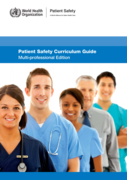
The Multi-professional Patient Safety Curriculum Guide (2011) was developed to assist in the teaching of patient safety in universities and schools in the fields of dentistry, medicine, midwifery, nursing and pharmacy. It also supports the on-going training of all health care professionals.
The C...

Mem Inst Oswaldo Cruz, Rio de Janeiro, Vol. 117: e220083chgsa, 2022
Two adjectives raise an issue for communicators working on Chagas disease (CD): “invisible and silent”. Two adjectives that can be ascribed to other neglected tropical diseases (NTD), but which are part of the essence of CD. Br...

To identify and to assess factors enhancing or hindering the delivery of breast and cervical cancer screening services in Malawi with regard to accessibility, uptake, acceptability and effectiveness.
Systematic review of published scientific evidence. A search of six bibliographic databases and gre...
This document provides information and recommendations for action, based on the current available knowledge around monkeypox. It is a first draft which will be updated in light of evolving evidence and additional information as they become available.
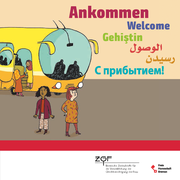
Nice multilingual information brochure for refugee women arriving in Germany/Bremen. Includes Information on:
- Learn German
- Education & Employment
- Healthcare & Pregnancy
- Protection against Violence
- Asylum for Women
- Conversation and Contacts in the City
All chapters are translated i...
Hanyane. A Village Struggles For Eye Health
recommended
Essential Drug list on page 36!!

LEAVING NO-ONE BEHIND | “A Journey to End NTDs – Elimination and Care” records what we have achieved over the last year and where we are now. It presents our plan of action for the coming years, bringing our ‘traditional’ NTD work together with ‘Disease Management Disability and Inclusio...
Цель этого документа – повысить уровень осознания актуальности приоритетных направлений научных исследований по проблеме ТБ/ВИЧ (то есть по тем направлениям, кот...

The report underscores that sexual and reproductive health and rights are often the first to be sacrificed during epidemics and that the gains of the past decade must be protected. The report also makes it clear that scarce resources must be focused on the most marginalized women and girls, includin...
COVID-19 vaccine hesitancy is currently one of the main obstacles to worldwide herd immunity and socioeconomic recovery. Because vaccine coverage can vary between and within countries, it is important
to identify sources of variation so that policies can be tailored to different population groups. ...
