
Filter
4621
Filtered Results: 4621
Text search:
special
needs
schools
Featured
Recommendations
404
New Publications
1254
Language
Document type
No document type
2842
Studies & Reports
672
Guidelines
483
Manuals
260
Strategic & Response Plan
175
Training Material
95
Fact sheets
34
Situation Updates
31
Brochures
13
Resource Platforms
9
Infographics
4
Online Courses
2
App
1
Countries / Regions
Global
177
India
173
Kenya
141
Uganda
116
Nepal
104
Ethiopia
104
Nigeria
97
Sierra Leone
88
Liberia
88
Myanmar / Burma
87
South Africa
83
Bangladesh
79
Rwanda
76
Tanzania
73
Zambia
73
Western and Central Europe
72
Ghana
66
Syria
66
Namibia
62
Malawi
60
Latin America and the Carribbean
58
Philippines
47
Africa
47
South Sudan
40
Ukraine
38
Indonesia
38
Lesotho
34
Congo, Democratic Republic of
33
Zimbabwe
31
South–East Asia Region
30
Eastern Europe
28
Haiti
27
Mozambique
26
Cambodia
25
Asia
24
Germany
24
East and Southern Africa
22
Yemen
22
Botswana
22
West and Central Africa
21
Guinea
19
Venezuela
19
Senegal
18
Afghanistan
18
Lebanon
17
Middle East and North Africa
16
Burkina Faso
15
Eswatini/ Swaziland
15
Pakistan
15
Cameroon
13
Vietnam
13
Jordan
12
Central African Republic
12
Colombia
11
Eastern Europe and Central Asia
11
Mali
11
Thailand
10
Sudan
10
Iraq
10
Somalia
10
China
9
Albania
8
Brazil
8
Tajikistan
7
Iran
7
Laos
7
Peru
7
Western Pacific Region
7
Russia
7
Palestine
7
Turkey
6
USA
6
Moldova
6
Sri Lanka
6
Madagascar
6
Timor Leste/ East Timor
5
Benin
5
North America
5
Mexico
4
El Salvador
4
Serbia
4
Kazakhstan
4
Hungary
4
Egypt
4
Greece
4
Georgia
4
Honduras
4
Angola
4
Libya
4
Malaysia
3
Croatia
3
Paraguay
3
Japan
3
Spain
3
Southern Africa
3
Papua New Guinea
3
Poland
3
North Macedonia
2
Togo
2
Fiji
2
Singapore
2
Kyrgyzstan
2
Niger
2
Burundi
2
Qatar
2
Lithuania
2
Saudi Arabia
2
Turkmenistan
2
Portugal
2
Azerbaijan
2
Belarus
2
Israel
2
Bolivia
2
Nicaragua
2
Romania
2
Chad
2
Ecuador
2
Guatemala
2
Switzerland
1
Gambia
1
Canada
1
Estonia
1
Uzbekistan
1
Morocco
1
Bulgaria
1
Armenia
1
Dominican Republic
1
Ireland
1
Maldives
1
Tunisia
1
United Kingdom
1
South Korea
1
Bosnia and Herzegovina
1
Latvia
1
Côte d’Ivoire / Ivory Coast
1
Belize
1
Costa Rica
1
Panama
1
Argentina
1
Djibouti
1
Slovakia
1
Authors & Publishers
Publication Years
Category
Countries
1815
Clinical Guidelines
292
Women & Child Health
290
Key Resources
285
Public Health
224
Capacity Building
115
Pharmacy & Technologies
6
Annual Report MEDBOX
2
Toolboxes
Mental Health
417
Disability
373
COVID-19
319
HIV
302
TB
156
Conflict
156
Planetary Health
145
Refugee
130
NTDs
112
Caregiver
106
Ebola & Marburg
94
Natural Hazards
74
Global Health Education
71
Rapid Response
67
AMR
60
NCDs
52
Malaria
47
Pharmacy
45
Health Financing Toolbox
43
Social Ethics
33
2.0 Rapid Response
31
Specific Hazards
28
Cholera
25
Polio
25
Zika
13
Typhoon
3
South Sudan
1
This evaluation is the fifth in a series of structured evaluations of CFS and was completed as part of three-year collaboration with World Vision and Columbia University. It was conducted with Syrian refugees in an urban setting in Zarqa, Jordan during the months of February to August 2014. The CFS ...

In many of Myanmar’s contested regions, healthcare services are provided through two parallel governance systems – by the government’s Ministry of Health, and by providers linked to ethnic armed organizations. Building upon efforts to build trust between these two actors following ceasefires s...
Findings from this report reveal that, rates of early marriage are high, a significant percentage of children contribute to the household’s income or are its main source of income, and restrictions on the mobility of women and girls constrain their participation in social and economic activities a...
Water, sanitation and hygiene (WASH) are critical in the prevention and care for all of the 17 neglected tropical diseases (NTDs) scheduled for intensified control or elimination by 2020.
Provision of safe water, sanitation and hygiene is one of the five key interventions within the global NTD ...
Provision of safe water, sanitation and hygiene is one of the five key interventions within the global NTD ...
Int J Environ Res Public Health. 2018 Jun; 15(6): 1279.
Published online 2018 Jun 16. doi: 10.3390/ijerph15061279

Joint Stakeholder Submission
Accessed: 29.09.2019
Accessed: 02.04.2020
This brief focuses specifically on the Grand Nord (Great North): the Beni and Lubero territories of northern North Kivu that are the epicentre of the outbreak. Further participatory enquiry should be undertaken with the affected populations, but given ongoing transmission, conveying key consideratio...
This revised and fully updated edition of the
International technical guidance on sexuality education
benefits from a new review of the current evidence, and reaffirms the position of sexuality education within a framework of human rights and gender equality. It promotes structured learning about...
Burkina Faso remains one of the poorest countries in the world, with 44.5% of the population living below the poverty line. To promote the rights of persons with disabilities, the country has adopted almost all of the relevant initiatives and international legal texts on the rights of persons with d...

Disaster Recovery Toolkit

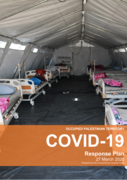
The primary focus of the plan continues to be prevention, preparedness and treatment of the the Novel Coronavirus (COVID-19) outbreak. Central to the plan are the following overall objectives:
To prevent further transmission of COVID-19 in the oPt;
To provide adequate care for patients aff...
From 2000 to 2010, Rwanda implemented comprehensive health sector reforms to strengthen the public health system, with the aim of reducing maternal and newborn deaths in line with Millennium Development Goal 5, among many other improvements in national health. Based on a systematic review of the lit...
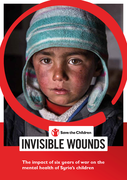
“The children are psychologically crushed and tired.
When we do activities like singing with them, they
don’t respond at all. They don’t laugh like they
would normally. They draw images of children
being butchered in the war, or tanks, or the siege
and the lack of food.”
Teacher in the...
