Filter
123
Filtered Results: 123
Text search:
Global
Council
on
Inequality,
AIDS
and
Pandemics
Featured
Recommendations
9
New Publications
22
Language
Document type
No document type
60
Studies & Reports
39
Guidelines
10
Strategic & Response Plan
6
Manuals
4
Training Material
2
Situation Updates
1
Resource Platforms
1
Countries / Regions
Global
11
Zambia
6
Nigeria
5
Africa
4
South Africa
4
Namibia
4
Kenya
3
Lesotho
3
Ghana
3
Latin America and the Carribbean
3
East and Southern Africa
3
Botswana
3
Sierra Leone
2
Malawi
2
Mozambique
2
Uganda
2
Ethiopia
2
Liberia
2
India
2
North Macedonia
1
Nepal
1
Colombia
1
Thailand
1
Mexico
1
Ukraine
1
Senegal
1
Kyrgyzstan
1
Burkina Faso
1
Zimbabwe
1
Morocco
1
Guinea
1
Asia
1
Venezuela
1
Hungary
1
Congo, Democratic Republic of
1
West and Central Africa
1
Middle East and North Africa
1
South–East Asia Region
1
Western and Central Europe
1
Jamaica
1
Norway
1
Portugal
1
Southern Africa
1
Argentina
1
Lebanon
1
Bangladesh
1
Brazil
1
Russia
1
Georgia
1
Indonesia
1
Myanmar / Burma
1
Authors & Publishers
Publication Years
Category
Countries
49
Women & Child Health
10
Key Resources
7
Public Health
6
Capacity Building
3
Clinical Guidelines
2
Pharmacy & Technologies
1
Toolboxes
HIV
23
Global Health Education
11
COVID-19
10
Health Financing Toolbox
7
Mental Health
6
Planetary Health
5
Caregiver
4
Disability
3
Rapid Response
2
Refugee
2
TB
2
Conflict
2
Natural Hazards
1
Ebola & Marburg
1
Social Ethics
1
Pharmacy
1

The power relations around global decisions which shape population health can be changed through new alliances and information flows. The Democratising Global Health Governance Initiative, of which WHO Watch is a project, is designed to contribute to improved population health (and health equity) th...

Abrupt reductions in international HIV assistance in 2025 have deepened existing funding shortfalls. The OECD estimates that external health assistance is projected to drop by 30–40% in 2025 compared with 2023, causing immediate and even more severe disruption to health services in low- and middle...

This report explores the extent to which evidence, policy, normative guidance and commitments on HIV and gender-based violence, and their interlinkages, is being translated into action on the ground in fragile settings. These issues are explored through the lens of training of peace support operatio...

Women, girls and marginalized groups who are largely dependent on natural resources for livelihoods are among the hardest hit by extreme weather patterns. These weather patterns limit their access to food, water, shelter, education and access to essential health services, including those that addres...
WHO‘s Global Strategy to Accelerate the Elimination of Cervical Cancer, launched today, outlines three key steps: vaccination, screening and treatment. Successful implementation of all three could reduce more than 40% of new cases of the disease and 5 million related deaths by 2050.

The overall objective of the framework is to support WHO and Members States in meaningful engagement of people living with NCDs, and mental health and neurological conditions to co-create and enhance related policies, programmes and services. This framework will contribute to advancing understanding...
Towards the Elimination of Mother-to-Child Transmission of HIV and keeping mothers Alive. 2012-2015

Health Systems in Transition. Vol. 5 No.3 2015

There has never been a more critical moment to invest in WHO, and strengthen the unique role it plays in global health. Now is the time to sustainably finance WHO and invest in a healthy return for all.

To realize Agenda 2030, aid agencies, private philanthropies, and their partners in the Global South need better data to monitor how official development finance (ODF) dollars advance the Sustainable Development Goals (SDGs) and avoid missing the mark. In this report, we summarize the results of a n...

Accessed on 20.10.2020
In its fight against maternal mortality, the government of Burkina Faso is supported
by the donor community which contributes to the health budget and also supports
specific projects aimed at improving access to health care. This report acknowledges
the efforts to address ...

UNAIDS and the World Health Organization have published this updated guidance on ethical considerations in HIV prevention trials. The new guidance is the result of a year-long process that saw more than 80 experts and members of the public give inputs and is published 21 years after the first editio...
Cancer
recommended
This volume presents the complex patterns of cancer incidence and death around the world and evidence on effective and cost-effective ways to control cancers. The Disease Control Priorities Volume 3 evaluation of cancer will indicate where cancer treatment is ineffective and wasteful, and offer alte...

Living Conditions among People with Activity Limitations in Malawi. A National Representative Study.
This research report provides results from the study on living conditions
among people with disabilities in Malawi. Comparisons are made between
individuals with and without disabilities and also between households with and without a disabled family member. Results obtained in Malawi are also comp...
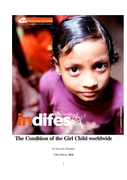
In the last five years, i.e. how old turned the Campaign “Indifesa” (Defenceless) in 2016, that was launched by Terre des Hommes in 2012, the world has become smaller. One can actually say that the derangements following the Arab Spring in 2011 reshuffled what is stable and what produces instabi...

In Control. A Practical Handbook for Professionals Working in Health Emergencies Internationally
recommended
In Control imparts knowledge, provokes reflection and triggers curiosity. The first half of the book provides an overview of the organisations, principles, frameworks and themes that every professional deploying to health emergencies should be aware of. The second half of the book provides practical...
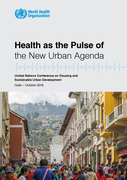
This report considers how to integrate health into urban planning, investments, and policy decisions, so as to support the implementation and achievement of the goals and objectives of the New Urban Agenda.

The objectives of the research presented in this report were to identify case studies of community-led HIV-related health and social inclusion service delivery organizations in eastern and southern Africa; describe the typologies of the services provided; and identify evidence of their service deliv...