
Filter
7466
Filtered Results: 7466
Text search:
county
health
team
Featured
Recommendations
666
New Publications
2089
Language
Document type
No document type
4114
Studies & Reports
1244
Guidelines
909
Manuals
470
Strategic & Response Plan
340
Training Material
142
Fact sheets
104
Situation Updates
97
Resource Platforms
21
Brochures
11
Infographics
7
Online Courses
5
Videos
2
Countries / Regions
India
327
Global
310
Kenya
270
Sierra Leone
201
Uganda
183
Liberia
183
Ethiopia
169
South Africa
165
Nepal
149
Nigeria
149
Myanmar / Burma
145
Rwanda
125
Bangladesh
121
Zambia
121
Malawi
119
Africa
113
Tanzania
111
Ghana
109
Western and Central Europe
106
Syria
104
Latin America and the Carribbean
93
Congo, Democratic Republic of
89
Namibia
84
Ukraine
80
South Sudan
74
Philippines
71
Lesotho
54
Guinea
54
Mozambique
52
West and Central Africa
49
Cambodia
48
South–East Asia Region
45
Zimbabwe
44
Indonesia
44
Yemen
43
Haiti
42
Asia
42
Senegal
41
East and Southern Africa
41
Eastern Europe
36
Botswana
34
Afghanistan
33
Burkina Faso
31
Venezuela
29
Pakistan
28
Cameroon
27
Middle East and North Africa
26
Central African Republic
26
Germany
25
Brazil
24
Eswatini/ Swaziland
24
Colombia
23
Russia
22
Eastern Europe and Central Asia
20
Vietnam
20
China
19
Mali
19
Somalia
18
Madagascar
18
Thailand
17
Benin
17
Lebanon
17
Sudan
16
Jordan
15
Western Pacific Region
14
Côte d’Ivoire / Ivory Coast
14
Moldova
14
Iraq
14
Laos
13
Tajikistan
12
Turkey
11
Peru
11
Albania
10
Sri Lanka
10
Angola
10
USA
9
North Macedonia
8
Togo
8
Iran
8
Papua New Guinea
8
Chad
8
Gambia
7
Kyrgyzstan
7
Niger
7
Burundi
7
North America
7
Georgia
7
Mexico
6
Serbia
6
Kazakhstan
6
Bolivia
6
Argentina
6
Palestine
6
Ecuador
6
Timor Leste/ East Timor
5
El Salvador
5
Chile
5
Armenia
5
United Kingdom
5
Portugal
5
Spain
5
Southern Africa
5
Egypt
5
Poland
5
Libya
5
Bhutan
5
Malaysia
4
Guinea-Bissau
4
Hungary
4
Paraguay
4
Turkmenistan
4
Romania
4
Greece
4
Honduras
4
Croatia
3
Jamaica
3
Japan
3
France
3
Bosnia and Herzegovina
3
Singapore
2
Estonia
2
Congo-Brazzaville
2
Uzbekistan
2
Vanuatu
2
Bulgaria
2
Mauritania
2
Italy
2
Mauritius
2
Tunisia
2
Azerbaijan
2
Belarus
2
Djibouti
2
Guatemala
2
North Korea
1
Canada
1
Fiji
1
Morocco
1
Mongolia
1
Qatar
1
Dominican Republic
1
Lithuania
1
Ireland
1
Saudi Arabia
1
Gabon
1
Uruguay
1
Maldives
1
Norway
1
South Korea
1
Morocco
1
Latvia
1
Nicaragua
1
Slovakia
1
Solomon Islands
1
Authors & Publishers
Publication Years
Category
Countries
3071
Key Resources
546
Clinical Guidelines
479
Public Health
404
Women & Child Health
381
Capacity Building
169
Pharmacy & Technologies
62
Annual Report MEDBOX
3
Toolboxes
COVID-19
613
HIV
491
Mental Health
453
Ebola & Marburg
301
Disability
295
TB
275
Conflict
256
Caregiver
221
Planetary Health
212
NTDs
197
Rapid Response
182
AMR
180
Refugee
137
Natural Hazards
124
NCDs
117
Pharmacy
112
Global Health Education
112
2.0 Rapid Response
105
Health Financing Toolbox
82
Malaria
81
Polio
49
Cholera
47
Zika
44
Specific Hazards
43
Social Ethics
24
Typhoon
7
South Sudan
2
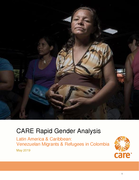
This Rapid Gender Analysis provides preliminary information and observations on the different needs, capacities and coping strategies of Venezuelan migrant and refugee women, men, boys, and girls in Colombia. It seeks to understand how gender roles and relations have changed as a result of the crisi...

This Guidance was developed in response to the increase in HIV-related human rights crises and the shrinking civic space for rights-related responses to HIV in recent years across the world. This document builds upon existing guidance documents, offering updated guidance for country-based United Nat...
The United States Agency for International Development (USAID) Bureau for Democracy, Conflict, and Humanitarian Assistance Office of U.S. Foreign Disaster Assistance (DCHA/OFDA) requested Food and Nutrition Technical Assistance II Project (FANTA-2) assistance to review Community-Based Management of ...

This paper has been prepared to inform discussion at the conference “Beating the DRUM - Domestic Resource Use and Mobilization for accelerating progress towards SDG3,”. Many countries face critical shortfalls in domestic resource use and mobilization (DRUM) for health, threatening to push health...

Zambia has recognised the Public Health threat of antimicrobial resistance and its impact on morbidity and mortality, as well as the subsequent economic consequences. The country has recorded microorganisms which have developed resistance to antimicrobial drugs. Notable among these are; Multidrug Re...

The Global Antibiotic Resistance Partnership (GARP)-Mozambique team, in partnership with the Center for Disease Dynamics, Economics & Policy (CDDEP), has produced this report as part of a solid com-mitment to develop actionable policy proposals to tackle antibiotic resistance and improve appropriate...

A Focus on the Journey to Self-Reliance for Preventing Child and Maternal Deaths . June 2018
The 2018 Acting on the Call report focuses on 25 countries’ journeys to self-reliance for preventing child and maternal deaths. Self-reliance is a country’s ability to finance and implement solution...
The 2018 Acting on the Call report focuses on 25 countries’ journeys to self-reliance for preventing child and maternal deaths. Self-reliance is a country’s ability to finance and implement solution...

Thesis presented in partial fulfilment of the requirements for the degree of Master of Nursing Science in the Faculty of Health Sciences at Stellenbosch University.
The mobile clinic health care services fulfil an essential role in delivering primary health care to the dwellers in the rural commun...
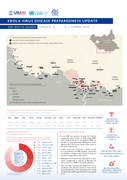
A new FMP was opened in Lutaya (Yei County), bringing the total number of EVD-related FMPs within South Sudan to 14. Six additional FMPs are operated in cooperation with DTM Uganda on the Ugandan side of the border due to access issues on the South Sudanese side.
A field mission was carried ou...
Cholera remains an issue of major public health importance in Kenya. Kenya has in recent years experienced outbreaks affecting different parts of the country

J Glob Health Sci. 2020 Jun;2(1):e3. A group of enzootic and zoonotic protozoan infections, the leishmaniases constitute among the most severely neglected tropical diseases (NTDs) and are found in all continents except Oceania. Representing the most common infectious diseases, NTDs comprise an open-...
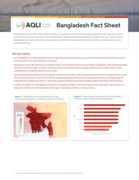
Bangladesh is the world’s most polluted country. Air pollution shortens the average Bangladeshi’s life expectancy by 6.9 years, relative to what it would be if the World Health Organization (WHO) guideline of 5 μg/m³ was met. Some areas of Bangladesh fare much worse than average, with air poll...
A Technical Brief for Breakthrough ACTION Field Teams
Social media can be used to collect and address rumors or popular beliefs among target audiences, share evidence-based and timely health information, receive instant feedback on materials, conduct remote trainings, promote awareness of a project...

Sudan recorded the first COVID-19 case on 13 March 2020 and, at the beginning of July, the Federal Ministry of Health had confirmed that nearly 10,000 people had contracted the virus, including over 600 who died from the disease across the country. Although more than 70 per cent of the confirmed cas...
The Zithromax® Supply Chain Assessment Tool is designed to guide assessment team members through a series of interviews
with key informants and to establish inspection procedures when conducting logistics field assessments. The protocol allows
the assessment team to examine the readiness of the N...

Lesotho’s predominantly rural population faces significant health challenges within a setting of inadequate human resources for health. It is essential that nurses and nurse-midwives, who together make up the largest health workforce in the country, be adequately prepared to address Lesotho’s He...
Antimicrobial resistance (AMR) is a major public health challenge, which is recognized as high priority area by the Government of India. The increasing consumption of antibiotics is one of the key drivers of antimicrobial resistance seen in bugs of public health importance. Irrational prescription o...
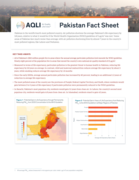
Pakistan is the world’s fourth most polluted country. Air pollution shortens the average Pakistani’s life expectancy by 3.8 years, relative to what it would be if the World Health Organization (WHO) guideline of 5 μg/m3 was met.1 Some areas of Pakistan fare much worse than average, with air pol...
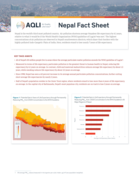
Nepal is the world’s third most polluted country. Air pollution shortens average Nepalese life expectancy by 4.1 years, relative to what it would be if the World Health Organization (WHO) guideline of 5 μg/m3 was met.1 The highest concentrations of air pollution are observed in Nepal’s southwes...
STGs are designed to assist health care professionals in making decisions about appropriate, effective patient care. However, health managers often have trouble setting and meeting the high standards required of modern, developed health care systems. With stakeholders expressing concern over issues ...
