
Filter
817
Filtered Results: 817
Text search:
Government
of
Mozambique,
World
Health
Organization
Featured
Recommendations
51
New Publications
178
Language
Document type
No document type
445
Studies & Reports
222
Guidelines
54
Strategic & Response Plan
38
Manuals
28
Situation Updates
13
Fact sheets
9
Training Material
7
Online Courses
1
Countries / Regions
Global
72
Mozambique
54
Africa
51
Malawi
29
Kenya
26
Zambia
25
South Africa
24
Zimbabwe
18
Tanzania
16
Uganda
16
Ethiopia
16
Congo, Democratic Republic of
14
Rwanda
12
Lesotho
11
Namibia
11
Nigeria
10
East and Southern Africa
9
Liberia
8
Eswatini/ Swaziland
8
Nepal
7
Ghana
7
Senegal
7
Angola
7
India
7
Madagascar
7
Sierra Leone
6
West and Central Africa
6
Bangladesh
6
Botswana
6
Indonesia
6
Burkina Faso
5
Cambodia
5
South Sudan
5
Myanmar / Burma
5
Pakistan
5
Cameroon
4
South–East Asia Region
4
Central African Republic
4
Mali
4
Thailand
3
Mexico
3
Ukraine
3
Afghanistan
3
Philippines
3
Guinea
3
Guinea-Bissau
3
Southern Africa
3
Yemen
3
Somalia
3
Benin
2
Togo
2
China
2
Syria
2
Kyrgyzstan
2
Niger
2
Haiti
2
Asia
2
Middle East and North Africa
2
Bosnia and Herzegovina
2
Côte d’Ivoire / Ivory Coast
2
Lebanon
2
Brazil
2
Moldova
2
Palestine
2
Chad
2
Iraq
2
North Macedonia
1
North Korea
1
Colombia
1
Timor Leste/ East Timor
1
Kazakhstan
1
Iran
1
Congo-Brazzaville
1
Malaysia
1
Vanuatu
1
Morocco
1
Armenia
1
Venezuela
1
Latin America and the Carribbean
1
Hungary
1
Jordan
1
Western and Central Europe
1
Turkmenistan
1
Jamaica
1
Japan
1
Mauritius
1
Norway
1
Portugal
1
Argentina
1
Vietnam
1
Eastern Europe
1
Papua New Guinea
1
Sri Lanka
1
Russia
1
Sudan
1
Georgia
1
Libya
1
Ecuador
1
Solomon Islands
1
Authors & Publishers
Publication Years
Category
Countries
262
Public Health
66
Key Resources
59
Clinical Guidelines
44
Women & Child Health
44
Capacity Building
16
Pharmacy & Technologies
6
Toolboxes
HIV
125
Disability
56
COVID-19
46
TB
41
Planetary Health
41
Health Financing Toolbox
32
Mental Health
31
Caregiver
24
Natural Hazards
22
Malaria
20
Global Health Education
19
NTDs
18
NCDs
16
Rapid Response
15
Refugee
13
Conflict
12
AMR
11
Pharmacy
10
Cholera
9
2.0 Rapid Response
8
Ebola & Marburg
5
Specific Hazards
3
Polio
3
Zika
1
Typhoon
1

Financing Global Health 2015 is the seventh edition of IHME’s annual series on global health financing. This report captures trends in development assistance for health (DAH) and government health expenditure as source (GHE-S) in low- and middle-income countries. Annually updated GHE-S and DAH est...
This short paper aims to identify key evidence gaps in our knowledge of livestock- and fisheries-linked antimicrobial resistance in the developing world, and to document on-going or planned research initiatives on this topic by key stakeholders.
The antimicrobial resistant (AMR) infections in anima...

Conditioned domestic financing policy, referring to the domestic financing of health projects, programs, and national responses conditioned by global health funding agencies and recipient country governments, is one mechanism to promote sustainability and country ownership. We aim to understand how ...
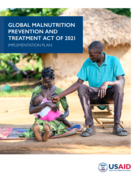
In October 2022, President Biden signed the Global Malnutrition Prevention and Treatment Act (GMPTA) into law, which directs USAID to prevent and treat malnutrition globally. The GMPTA further codifies USAID’s leadership on nutrition, with a focus on evidence-based interventions across health syst...
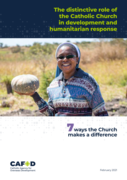
7 Febr. 2021
As COVID-19 continues to wreak havoc in countries – decimating people’s livelihoods, and leaving health systems struggling to provide healthcare and vaccines for the entire population - governments and donors should look to the Church as a partner. The essential Church networks, tr...
Integrated community case management (ICCM) – an approach where community-based health workers are trained to identify, treat and refer children under-five with pneumonia, diarrhoea and malaria – is increasingly being used across sub-Saharan Africa to supplement the gaps in basic healthcare prov...

WHO/HTM/TB/2007.384a
“TB is too often a death sentence for people with AIDS.
It does not have to be this way.”
-Nelson Mandela, International conference on HIV /AIDS, Bangkok, Thailand, July 2004
District Level M & E Training and Reference Material for Primary Health Care Programmes
2nd edition

World Health Organization. (2022). Toolkit for developing a multisectoral action plan for noncommunicable diseases: module 4: developing an implementation plan.
Accessed: 03.03.2020


Monitoring and evaluation framework
recommended
COVID‑19 strategic preparedness and response

Global HIV Strategic Information Working Group
For Populations At Risk For HIV
Global HIV Strategic Information Working Group
